
The Delhi High Court on Wednesday allowed a plea to implead DGCA as a party to a PIL seeking quashing of approvals being granted by the Centre to operationalise the $30 million deal between Tata Sons and Malaysia-based AirAsia.
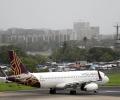
Singapore Airlines on Tuesday said Vistara will be merged with Tata group-owned Air India. Tata group owns a 51 per cent stake in Vistara, and the remaining 49 per cent shareholding is with Singapore Airlines (SIA). As part of the transaction, SIA will also invest Rs 2,058.5 crore in Air India.

The letter shared with the media on Saturday comes amid Maharashtra losing several big-ticket projects to neighbouring Gujarat.

Due to the group's presence across multiple businesses, it is in a unique position in the aviation industry to bring the best of talents.
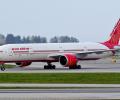
They say better late than never. For the Tatas, the original owners of Air India, bringing back the airline to its fold is worth the wait even if the attempt to privatise the bleeding national carrier by successive governments has taken over two decades. While many airlines have come and gone from the Indian skies since the time when the first move was made to privatise Air India to date, the salt-to-software conglomerate has never let the love affair with aviation, more so with Air India that its former chairman Jehangir Ratanji Dadabhoy Tata (JRD) had, to go off the radar. It is said that Tata group executives used to complain in private that JRD -- the pioneer of the Indian aviation industry -- spent more time worrying about Air India than the Tata group when he was heading both the entities.

The Tata group may have to deploy upwards of $1 billion to improve the airline's passenger reservation system, upgrade and refurbish Air India's fleet, primarily the wide-body aircraft which are the mainstay for the airline's international operations, people in the know said. While the group has not yet decided on how it intends to integrate Air India with its existing airlines AirAsia India and Vistara, sources said the first task will be to refinance Air India's existing loans, upgrade its aircraft gradually, and rewrite multiple business contracts with vendors and suppliers. "They will have to do 100 things to stabilise the airline and will have to put in a lot of money," DIPAM secretary Tuhin Kanta Pandey said, confirming that many aircraft are grounded.

Right from the early days of liberalisation, there have been political controversies surrounding several cases that landed on the FIPB table and which, in turn, have often led to court battles.

UK's largest retailer Tesco, Singapore Airlines and Etihad queued up to invest in India as a persistent UPA threw open more sectors to foreign investments with indications of more big ticket deals to be announced in the new year.
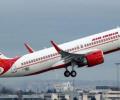
For the AI bid, Interups has joined hands with a few employees of the airline, and plans to raise funds by splitting some of its infrastructure-related assets into an aviation InvIT, which will have underlying assets such as air routes, ground handling, repairs, and training etc.
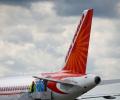
The industry is hoping the Tatas deepen their dive and offer two stable airlines -- a Vistara merged into Air India servicing the international routes, and an AirAsia India merged with Air India Express that competes with the low fare airlines in India and offers destinations within five hours, says Anjuli Bhargava.
Experts said the risks associated with the Indian Experts say that aviation sector would keep investors away from airline stocks.

Tata said that their exposure in the airline was merely a "financial investment", does not represent a major re-entry into the airlines business.

French aerospace major Thales Group is eyeing major expansion in India. The group has started planning to set up a maintenance, repair, and overhaul (MRO) organisation in India to support Indian airlines - many of which are its customers for avionics support. "We are looking to set up an MRO, so that they don't have to travel to West Asia or Singapore. "Final decision is yet to be taken, but this is a clear intent showing the growth potential in India that we are looking to set up a sub-centre here," said Yannick Assouad, executive vice-president, avionics at Thales, who was on her maiden visit to the group's India office at Bengaluru since taking charge.

Salt-to-software conglomerate Tata group was among "multiple" entities who on Monday put in preliminary bids for buying the government's stake in loss-making carrier Air India.
The Tata Group-owned Air India has readied a five-year transformation plan, which is expected to take its domestic market share to 30 per cent, up from 8.4 per cent logged in June. IndiGo leads with a market share of 58.8 per cent. The transformation plan--Vihaan.AI-unveiled on Thursday revolves around tripling the domestic market share with investments in new aircraft, technology and improvements in customer service.
Air Asia will hold 49 per cent and the remaining will be owned by Tata Sons and Telestra Tradeplace Pvt.

AirAsia plans to sell 12 planes this year, a move that will bring in around 500 million ringgit ($156 million) in net profit.

The acquisition will give the Tatas a firm footing on international routes and generate economies of scale.

To attract bidders, the government had decided to hive of around Rs 35,000 crore of the company's debt into a separate subsidiary, leaving around Rs 23,286 crore to be absorbed by the new bidder.

AirAsia's Fernandes says CEO for India will be an Indian; proposed airline firm with Tata may hit ministry hurdle
"The strategic divestment transaction of Air India successfully concluded today with transfer of 100 per cent shares of Air India to M/s Talace Pvt Ltd along with management control," DIPAM secretary Tuhin Kanta Pandey said in a tweet. A new board, led by the strategic partner, takes charge of Air India, he added.
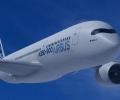
Planemakers have started pitching their latest aircraft to a privatised Air India which has been acquired by salt-to-steel conglomerate Tata Sons. European aerospace major Airbus on Monday said that it is in talks with the airline to sell its long haul aircraft Airbus A350-900. The wide-body aircraft is capable of flying non-stop between India and United States- one of the most popular and revenue generating routes.
This is the largest single dose of equity infusion into the joint venture since its launch in January 2015.

Tata-SIA have applied to the Civil Aviation Ministry for a no-objection certificate to start a full-service airline in India.

The aviation minister, Ajit Singh, on Tata-Air Asia joint venture
Among executives who have been approached are former president and CEO of IndiGo Aditya Ghosh, Wolfgang Prock Schauer, current president and Chief Operating Officer at IndiGo and Sanjay Kumar, Chief Strategy and Revenue Officer of IndiGo.

Giving an idea of the scale of its ambitions, the four-month-old airline recently placed an order for 50 aircraft even as the sector is struggling.
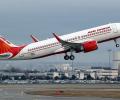
The government has notified the agreement between Air India and special purpose vehicle AIAHL for the transfer of non-core assets, ahead of the national airline's takeover by the Tata Group. The government had in October last year, inked the share purchase agreement with the Tata Group for the sale of national carrier Air India for Rs 18,000 crore. The Tata Group is expected to take full control of the airline, it founded in 1932, on Thursday. The cash component of the deal would come once the handover process is completed. The Tata Group would pay Rs 2,700 crore cash and take over Rs 15,300 crore of the airline's debt.

The $100 billion Tata group conglomerate is a major beneficiary of the decision to open up aviation in India.
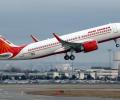
The Delhi high court on Thursday dismissed BJP leader Subramanian Swamy's plea seeking to set aside the Air India divestment process on the allegation that the methodology adopted by the government in the valuation of the national carrier was "arbitrary, illegal and against public interest". The order was passed by a bench of Chief Justice D N Patel and Justice Jyoti Singh. The court said a detailed order will be uploaded. "Dr. Subramanian Swamy, sir we are dismissing this matter...," the bench said.
The government on Monday signed the share purchase agreement with Tata Sons for the sale of national carrier Air India for Rs 18,000 crore. Earlier this month, the government had accepted an offer by Talace Pvt Ltd, a unit of the holding company of the salt-to-software conglomerate, to pay Rs 2,700 crore cash and take over Rs 15,300 crore of the airline's debt. Following that, on October 11 a Letter of Intenet (LoI) was issued to the Tata Group confirming the government's willingness to sell its 100 per cent stake in the airline.

However, any progress on the deal depends upon Goyal giving up control of the company.

"Financial bids for Air India disinvestment received by Transaction Adviser. Process now moves to concluding stage," DIPAM Secretary Tuhin Kanta Pandey tweeted.
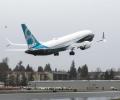
Govt's decision to allow in-flight Wi-Fi doesn't take off with budget airlines, full-service carriers enthused

National carrier Air India became part of the 27-member global airlines grouping Star Alliance, as budget airline AirAsia India launched operations and Tata-SIA joint venture carrier Vistara received the flying permit and announced its intentions to start operations from January 9.

Following the entry of Tata-SIA and AirAsia into the Indian aviation market, the domestic aviation industry is seeing increased interest from private entities.
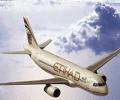
In a move which could affect the Jet-Etihad deal or start-up carriers like Tata-SIA or AirAsia India, DGCA has made it clear that foreign airlines or investors would not have the right to control the management of an Indian carrier.

Singapore Airlines first approached the Tatas, its old choice for a venture in India, and was aware of AirAsia negotiations.
.jpg)
As per the FIPB agenda, the proposal will be taken up on October 18.
Indian airlines currently are required to have a minimum fleet of five aircraft and five years of operational experience for starting international services.
